01 — Diagnose
Root cause analysis for recurring fuel problems
Some fuel problems keep coming back. Filters block again a month after replacement, a generator or boiler fails to start, a pump is noisy again, contamination reappears after the tank was cleaned. Root cause analysis is our structured investigation for those cases — testing the mechanism, the fuel and the operating environment together, because treating any one in isolation is what let the fault return.
Key facts
| When to use it | After a fault has recurred following remediation |
|---|---|
| Typical duration | One to two days on site; on-site bacteria results in 48 hours, full lab report in 92 hours |
| Method | Structured decision tree across mechanism, fuel and environment |
| Output | Written findings report with cause and prevention plan |
| Standards | ISO 4406, BS 2869, manufacturer specifications |
What the work covers
- Full fault and intervention history review
- Fuel sampling at multiple points and depths
- Independent laboratory analysis including microbial culture
- Water ingress path investigation — vents, seals, fill points, bund
- Mechanical inspection of pumps, filters and pipework
- Operating environment and duty cycle review
- Written findings with a specific, costed prevention plan
What you receive
- Written root cause findings report
- Multi-point laboratory analysis results
- Evidence trail supporting the conclusion
- Specific costed prevention plan
- Revised maintenance interval recommendation
- Follow-up verification visit where appropriate
Common questions
Our filters keep blocking. Is that always the diesel bug?
Not always. Microbial growth is a common cause, but repeat blockage can also come from degraded fuel forming gums and sediment, from a tank coating breaking down, from corrosion product, or from sludge disturbed by deliveries. They need different remedies, which is exactly why we test rather than assume.
We cleaned the tank and the contamination came back. Why?
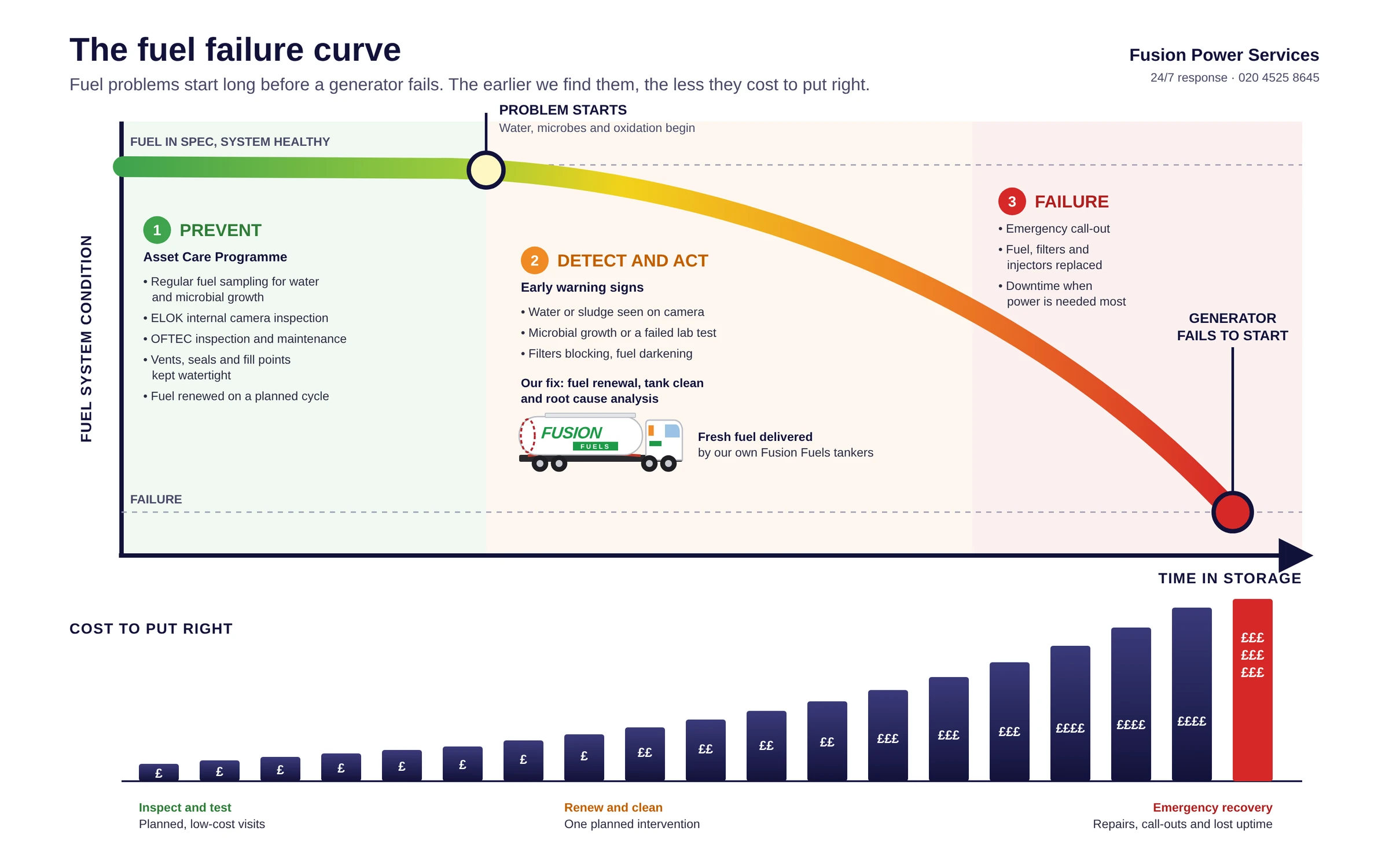
Often because the ingress path was never closed. Cleaning removes what has accumulated; it does not stop water getting in. If a vent, seal, fill point or bund is letting water in, the tank will recontaminate on the original timescale. Finding that path is the point of the investigation.
What if you cannot find the cause?
Then we say so, tell you what we ruled out and what evidence supports that, and set out what further testing would be needed. A report that names a cause the evidence does not support is worse than no report.
Get a quote for root cause analysis
Tell us about the site and the fuel system and we will come back with a scope and a price — or tell you if a different service is the one you actually need.