04 — Clean
Fuel tank cleaning
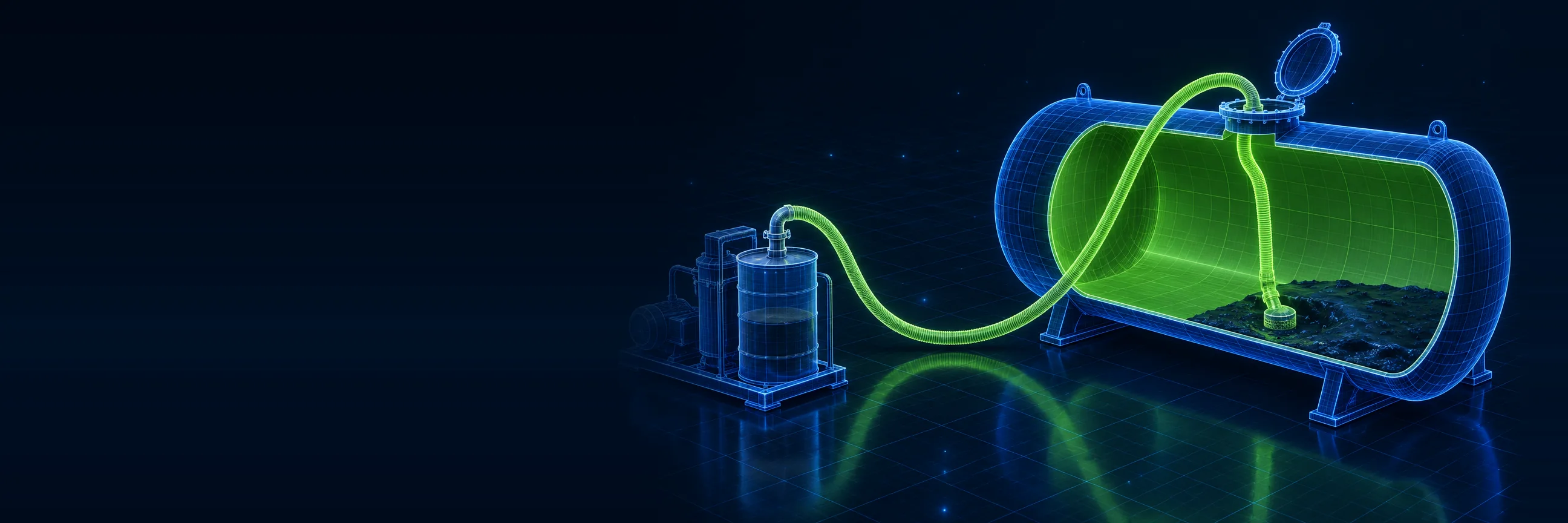
Tank cleaning deals with the source of contamination rather than its symptoms. Where a fuel refresh deals with the fuel, cleaning addresses the tank itself — the water lying under the fuel, the sludge on the floor, the biofilm on the walls and the corrosion underneath it. If contamination keeps returning after a refresh, this is the job that actually fixes it.
Key facts
| Entry | Manned entry by our own in-house confined-space team where entry is required |
|---|---|
| Typical duration | One to two days for a standard bulk tank |
| Fuel handling | Uplifted, filtered and returned, or disposed of if off-specification |
| Output | Clean certificate, ELOK camera footage and waste transfer notes |
| Regulations | Confined Spaces Regulations 1997, Duty of Care, DSEAR |
What the work covers
- Fuel uplift to a clean vessel, with filtration and return where fuel is serviceable
- Water and sludge extraction from the tank floor
- Microbial contamination removal and biocide treatment where indicated
- Manned-entry or mechanical cleaning of internal surfaces by our own in-house team
- Internal ELOK camera inspection of the cleaned tank
- Corrosion and coating assessment of the exposed shell
- Licensed disposal of all arisings under Duty of Care
What you receive
- Tank clean certificate
- Internal camera inspection footage and stills
- Before and after photographic evidence
- Waste transfer notes for all arisings
- Shell and coating condition assessment
- Recommended cleaning interval
Common questions
How long does a tank clean take and will we lose fuel supply?
A standard bulk tank is typically a one to two day job. Supply is interrupted for part of that, so for standby generation we plan the work around your resilience requirements — often cleaning one tank at a time on a multi-tank site, or arranging temporary bulk storage so cover is maintained throughout.
Will we lose the fuel that is in the tank?
Usually not. Fuel is uplifted to a clean vessel, filtered and returned. Only fuel that is genuinely off-specification on laboratory analysis is removed for disposal, and we will tell you which it is before disposing of anything.
How often should a tank be cleaned?
It depends on condition rather than the calendar. Sites with annual sampling usually clean every three to five years, triggered by the sample results. A tank that has never been cleaned or opened should be inspected and sampled first so the scope can be set from evidence.
Get a quote for fuel tank cleaning
Tell us about the site and the fuel system and we will come back with a scope and a price — or tell you if a different service is the one you actually need.